A Coast Running Out of Water

A companion site to the book

A Coast Running Out of Water

Reading the ecology of Adelaide, from the gulf to the ranges. (working title)

In under an hour you can drive from salt water to a summit that catches twice the plains' ration of rain — and everything alive in between has arranged itself along that one lopsided slope.

A work in progress — the full first draft is complete, but the book is not yet published.
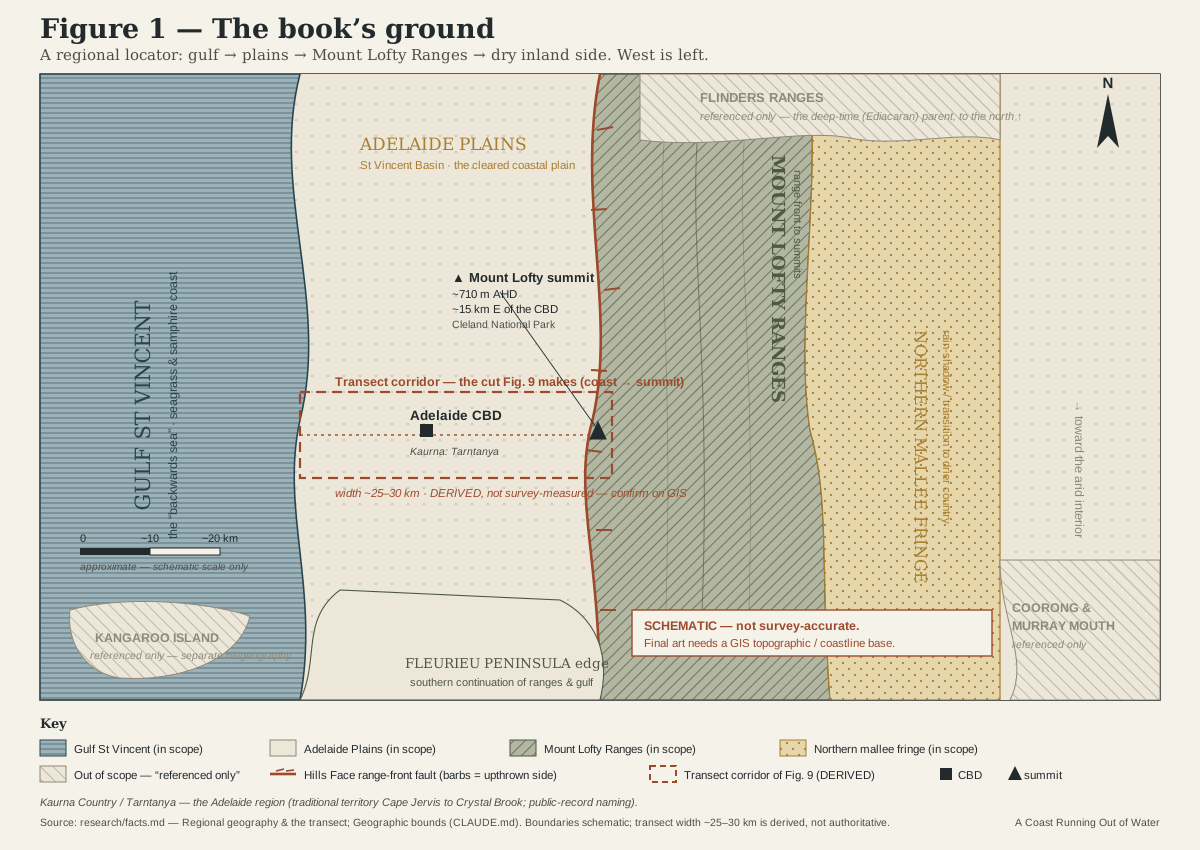
Schematic locator map of the Adelaide region: Gulf St Vincent on the west, the Adelaide Plains, the Mount Lofty Ranges as an upland spine, the Fleurieu Peninsula to the south, and the northern mallee fringe behind the ranges.
Figure 1 — the book's ground: Gulf St Vincent to the mallee fringe, schematic.

Deep time built the stage.
Drought wrote the rules.
A coast running out of water.

Adelaide is the most legible collision of deep time, drought and clearance of any Australian capital — a place where the whole story of a landscape can be read in a single afternoon's drive. This site follows the book's braid: four forces, taken in the order they built the place.

The idea

Four forces,
one braid

Adelaide sits where a dropped gulf basin meets an uplifted ranges block, in one of the handful of climates on Earth that trades a wet winter for a killing-dry summer.

The book reads Adelaide's ecology in the order that built it — rock first, then drought, then the living gradient those two forces produce, and finally the people who, in under two centuries, cleared most of it and are now, in patches, learning to mend it. Each force sets the terms for the one after it.

See how the gradient works →

I

Deep time built the stage

The ranges behind Adelaide are the southern end of the Adelaide Rift System. The land steps up from a dropped gulf basin to an uplifted ranges block, along faults that are still active today.

II

Drought wrote the rules

A Mediterranean summer-drought climate: wet winters, killing-dry summers. It's one of only a handful of such climates on Earth — and every one of them is a global biodiversity hotspot.

III

The gradient demonstrates it

Gulf St Vincent's seagrass and samphire, up across the Adelaide Plains, up the range front to the Mount Lofty summits, and down into the rain-shadow mallee behind.

IV

A city rewrote the surface

One of Australia's most heavily cleared, most peri-urban landscapes. Reading Adelaide's ecology means reading rock, drought and absence at once — then restoration, and people.

The living gradient

One slope, from gulf to range

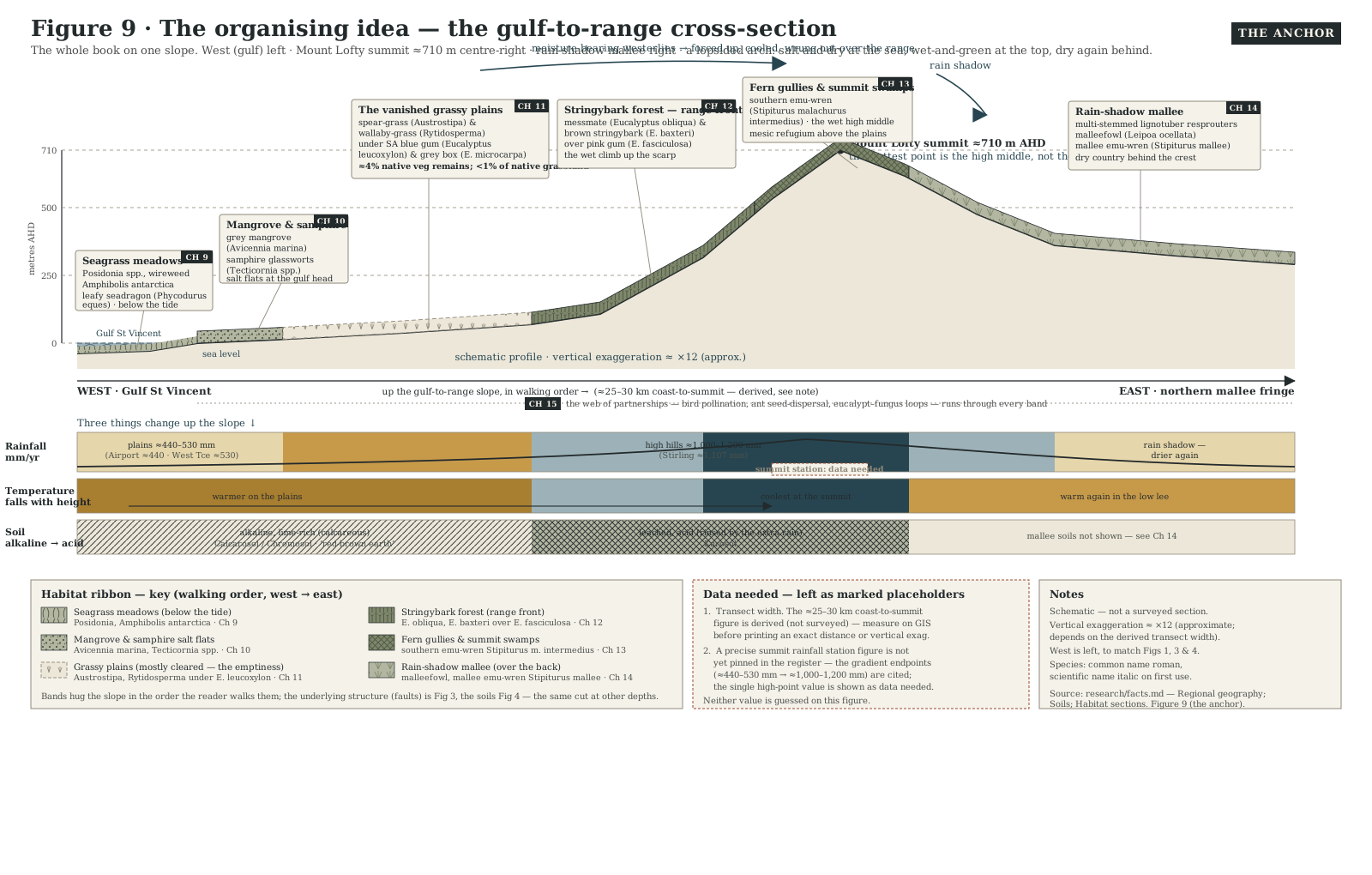
Slice the Adelaide region open from the floor of Gulf St Vincent to the summit of Mount Lofty, and its living communities sort themselves out along a single, steep climb — salt and dry at the sea, wet and green at the top, dry again in the rain shadow behind.

Annotated west-to-east cross-section of the Adelaide region running from Gulf St Vincent up to the Mount Lofty summit and down into the rain-shadow mallee, with habitat bands, and rainfall, temperature and soil reference strips along the slope.
Figure 9 · The anchor The whole book on one slope. Slice the Adelaide region open from the floor of the gulf to the summit of Mount Lofty and stand the cut face up, and its living communities sort themselves out along a single short, steep climb — salt and dry at the sea, wet and green at the top, dry again in the rain shadow behind.

Walk the gradient →

The book

Four acts, eighteen chapters

See the full chapter list →

The book follows the causal braid above — one chapter per file, read in the order the place was built, with a living cold-open before the geology so you meet the country before you meet the rock beneath it.

Work in progress. The full first draft of all eighteen chapters is complete. The manuscript is still being checked, chapter by chapter, against a canonical facts register before anything is called final — and it is not yet published or for sale.

Follow the writing

One email, when there's real news

No countdown, no sales pitch — just a note when a chapter reaches a real milestone, or when the book itself is ready to read.

Free. No spam. Unsubscribe any time.